https://bbc.com/news/articles/c0448y8ryd3o
Wednesday, May 29, 2024

Tuesday, May 19, 2020
Samsung planning to launch 600MP camera sensors that exceed human eye capabilities
Samsung has been making great strides towards larger camera sensors with ultra-high resolutions. Last year, the company announced 64MP image sensor modules for smartphones and then unveiled its flagship 108MP camera sensor, which is used int he recently-launched Galaxy S20 Ultra. Now, the company says that it has bigger plans in the field of image sensors.
Yongin Park, EVP, Head of Sensor Business Team, System LSI Business, said in an article published on the company’s website that human eyes are said to match a resolution of around 500MP. In comparison, most modern DSLR cameras and smartphones offer 40MP and 12MP sensors, respectively, and that the industry has a long way to go before it can match the capabilities of human eyes. To that end, the company is planning to develop camera sensors that have resolutions of as high as 600MP.
While it is tricky to create a balance between resolution and pixel size, as smaller pixels can reduce image quality, the company has been developing advances pixel binning technologies. Its 64MP sensors use 2×2 pixel binning, while its 108MP sensors use 3×3 pixel binning to increase light absorption and mitigate issues related to low-light conditions. Similar technologies will be used in the company’s upcoming ultra-high-resolution camera sensors.
Samsung is also developing camera sensors for autonomous vehicles and drones
Park said that most cameras available today can only take images that are visible to the human eye (wavelengths between 450nm and 750nm), and sensors that can detect light wavelengths outside of that range are hard to come by. Image sensors that can perceive ultraviolet light and infrared waves can be used to benefit a wide range of areas, including agricultural and medical fields.
Image sensors with ultraviolet light perception can be used for diagnosing skin cancer, while infrared camera sensors could help in quality control in industrial use cases. Samsung’s Systems LSI business, which develops image sensors, is also looking to create sensors that can register smells and tastes.
While the most popular use case of high-resolution sensors has recently been the field of smartphones, Samsung says that it is looking to provide camera sensors for autonomous vehicles, drones, and other IoT (Internet of Things) devices. The company’s aim to develop 600MP camera sensors might not be for smartphones, but other devices such as smart cars. It is being rumored that Samsung is planning to launch a 150MP Nonacell camera sensor for smartphones
Rumor: Samsung developing new 150MP Nonacell sensor for Q4 2020
Samsung may be developing a new 150-megapixel sensor for flagship phones, according to a fresh rumor passed along via Twitter. It claims that the sensor has a footprint of around 1 inch and that it uses the same Nonacell technology that was employed by the Galaxy S20 Ultra’s ISOCELL Bright HM1 sensor.
The rumor further suggests that Xiaomi will be the first third-party company to utilize the 150MP shooter in one of its flagship phones scheduled to be unveiled in Q4 2020. Other companies including Oppo and Vivo will supposedly employ the module in the first quarter of 2021. They’ll pair the sensor with the unannounced Qualcomm Snapdragon 875 chipset which will presumably beat at the heart of their premium models.
Nonacell is seemingly reviving the race for more pixels
Now, since the sensor is said to rely on Nonacell technology, it should combine nine pixels into one to achieve higher light absorption. And because the sensor is said to have a resolution of 150-megapixels, the final shots should technically have a pixel count of around 16MP, as opposed to the ISOCELL Bright HM1 sensor which delivers 12MP shots.
It’s interesting to see how this camera technology is giving Samsung a real incentive to aim for a higher pixel count for its sensors. For the most part, the race for more pixels had slowly died off in recent years, but the introduction of Nonacell is seemingly reviving that philosophy, even though it may be doing so for different technical reasons.
Samsung could be creating this sensor specifically for its clients in China; in other words, there’s no way to be certain that the Korean giant will use the same exact sensor in one of its future flagship phones such as the Galaxy Note 20 or Galaxy S21. But a variation of it, at least, is likely to be developed for Samsung’s own purposes.
Samsung unveils 50MP ISOCELL GN1 camera sensor with dual-pixel autofocus
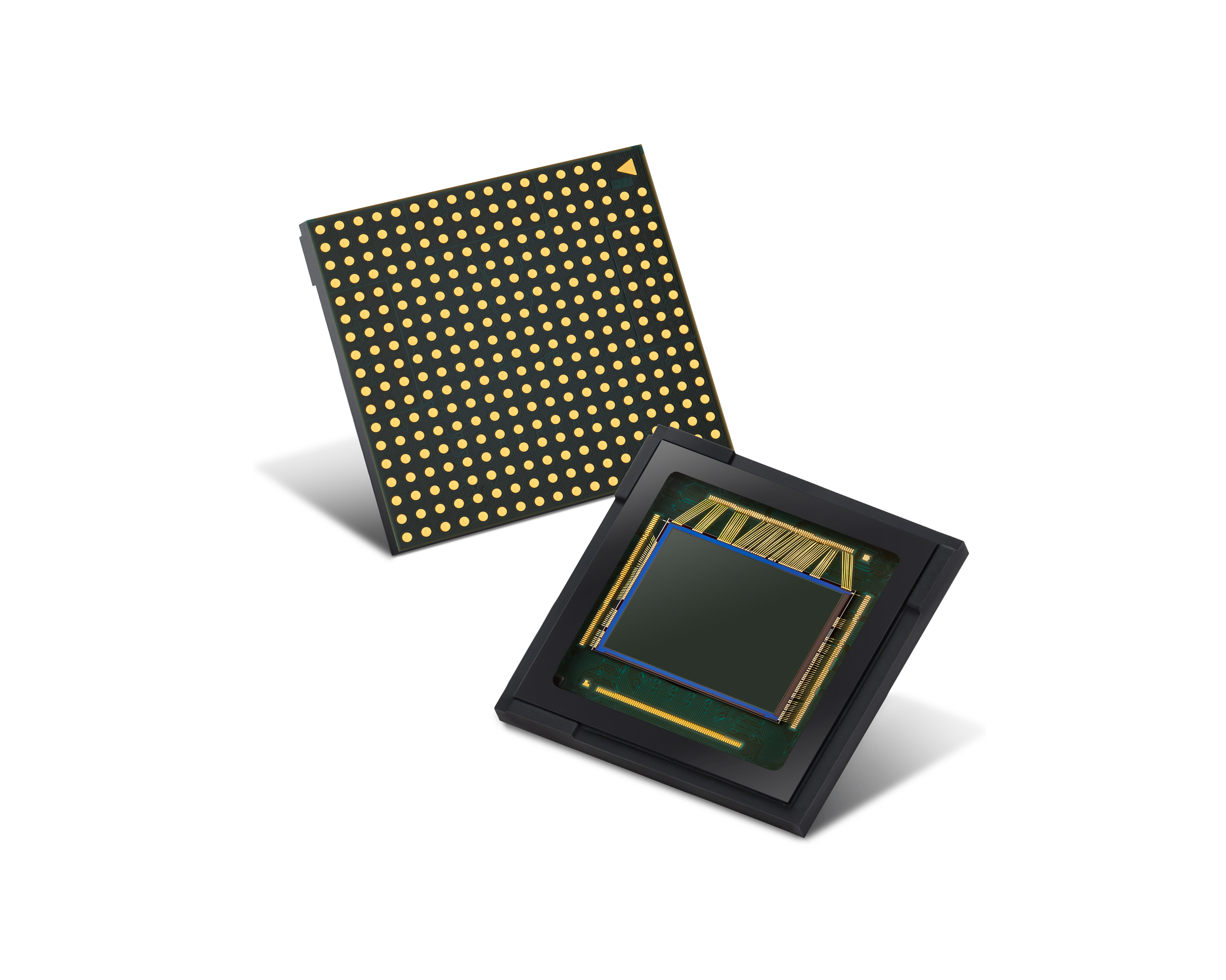
We had reported yesterday that Samsung could soon launch a new ISOCELL camera sensor with 50MP resolution and larger pixels. Today, the company has unveiled the ISOCELL GN1 camera sensor with larger pixels, faster autofocus mechanism, and support for 8K video recording.
The ISOCELL GN1 is a 1/1.3-inch camera sensor with a 50MP resolution. It is the company’s first image sensor to feature both dual-pixel autofocus and Tetracell (4-in1) pixel binning. Samsung says that the ISOCELL GN1’s native pixel size of 1.2μm can be turned into 2.4μm pixels using Tetracell technology for stellar low-light photos.
This new camera sensor features 100 million focus units (two agents in each pixel) for super-fast and reliable autofocus speed even in low-light conditions. Two photodiodes are placed side-by-side in each pixel, and both receive light from different angles, which is then used for phase-detection.
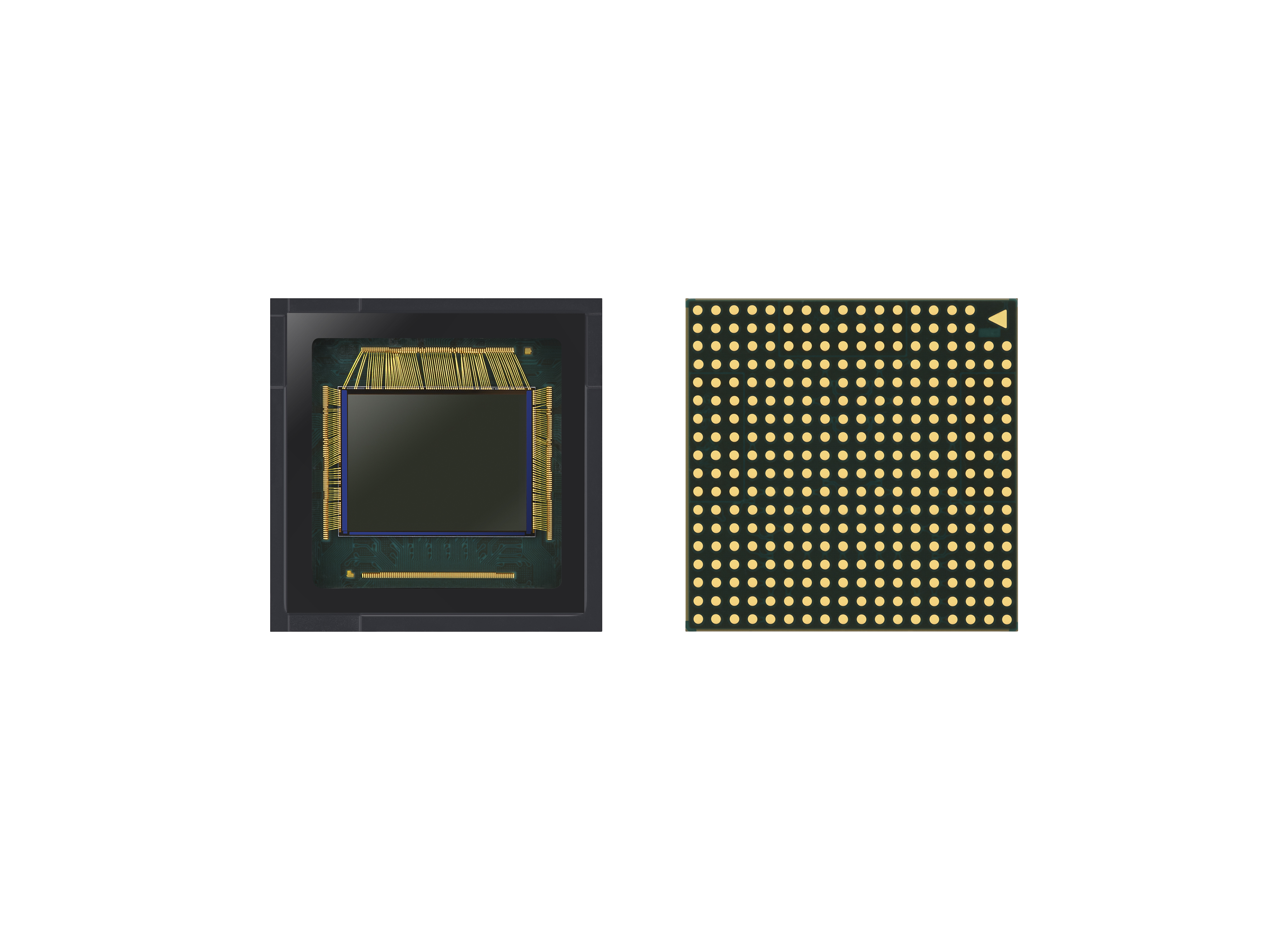
In the pixel-binning mode, the ISOCELL GN1 can capture 12.5MP still images with 2.4μm pixels for improved low-light photography. Samsung says that its algorithms also offer a mode that lets users capture 100MP images using the 50MP sensor. Other features of the new sensor include Smart ISO, gyro-based EIS, and up to 8K 30fps video recording. It can also record 1080p videos at 240fps (with autofocus) and 400fps (without autofocus).
Yongin Park, Executive Vice President of Sensor Business at Samsung Electronics, said, “With innovative pixel technologies, Samsung has been at the forefront of offering high-performance image sensors that closely cater to increasingly diversifying market needs. The ISOCELL GN1 is part of that commitment to deliver stunning images to consumers in any environment. We will continue to introduce image sensor solutions at the cutting-edge that will lead the next trends in mobile photography.”
The ISOCELL GN1 will go into mass production later this month, and we can expect new smartphones with the sensor later this year. It will compete with Sony’s IMX 689 and IMX700 sensors with similar features. The new 50MP sensor will first reportedly be used in a Vivo phone later this year. The company is also rumored to be working on 150MP, 250MP, and 600MP image sensors.
Samsung’s smartphone business to benefit from Huawei’s ban by the US
Samsung is still the world’s largest smartphone vendor, according to the latest market research numbers. However, it was facing fierce competition from the second-largest smartphone brand, Huawei. A few days ago, the US extended its ban on Huawei and its subsidiaries over fears related to data security. This decision will likely prove to be a booster for Samsung’s smartphone business.
Analysts and industry insiders say that the ban on the Chinese tech giant will help Samsung recover from the COVID-19 slump sooner than expected. Since Huawei can’t use Google apps on its smartphones, and probably won’t be able to get a supply of SoCs from TSMC, it won’t be able to sell smartphones outside of China. Samsung can gain market share from Huawei in Europe as the Chinese brand was its direct competitor.
Huawei was barred by the US from using GMS (Google Mobile Services) on its new smartphones since 2019, which resulted in a drop in sales. However, the fall will be even higher this year as the company won’t be able to produce smartphones without processors from firms like TSMC. This will definitely boost Samsung’s presence in Europe and the UK.
Lee Kyu-ha, Analyst at NH Investment & Securities, said, “Last year, Huawei’s market share went down because it could not use Google Mobile Services on its products amid the U.S-China trade war, but this time, it might face a production problem. As Huawei sees damage, Samsung’s smartphone business can expand.”
While sanctions against Huawei is excellent news for Samsung’s smartphone business, it could hurt the company’s chipset and display businesses. Samsung Display supplies OLED screens for Huawei phones, while the chipset business was poised to become a 5G modem supplier for Huawei’s entry-level and mid-range smartphones. Samsung also sells camera sensors for some Huawei and Honor phones.
Samsung’s smartphone business to benefit from Huawei’s ban by the US
Samsung is still the world’s largest smartphone vendor, according to the latest market research numbers. However, it was facing fierce competition from the second-largest smartphone brand, Huawei. A few days ago, the US extended its ban on Huawei and its subsidiaries over fears related to data security. This decision will likely prove to be a booster for Samsung’s smartphone business.
Analysts and industry insiders say that the ban on the Chinese tech giant will help Samsung recover from the COVID-19 slump sooner than expected. Since Huawei can’t use Google apps on its smartphones, and probably won’t be able to get a supply of SoCs from TSMC, it won’t be able to sell smartphones outside of China. Samsung can gain market share from Huawei in Europe as the Chinese brand was its direct competitor.
Huawei was barred by the US from using GMS (Google Mobile Services) on its new smartphones since 2019, which resulted in a drop in sales. However, the fall will be even higher this year as the company won’t be able to produce smartphones without processors from firms like TSMC. This will definitely boost Samsung’s presence in Europe and the UK.
Lee Kyu-ha, Analyst at NH Investment & Securities, said, “Last year, Huawei’s market share went down because it could not use Google Mobile Services on its products amid the U.S-China trade war, but this time, it might face a production problem. As Huawei sees damage, Samsung’s smartphone business can expand.”
While sanctions against Huawei is excellent news for Samsung’s smartphone business, it could hurt the company’s chipset and display businesses. Samsung Display supplies OLED screens for Huawei phones, while the chipset business was poised to become a 5G modem supplier for Huawei’s entry-level and mid-range smartphones. Samsung also sells camera sensors for some Huawei and Honor phones.
Samsung’s royal line to end, chief vows in historic apology
Samsung Group Vice Chairman and de facto head, Lee Jae-yong, vowed to be the last leader in the company’s royal line which started with his grandfather, Lee Byung-chul. The pledge was made as part of a historic public apology televised out of Seoul earlier today.
The occasion marked Lee’s first official media appearance in half a decade. In the meantime, the business magnate lived through nearly a year of incarceration on charges of corruption, perjury, and embezzlement, was convicted to five years in prison, but managed to appeal his way to probation; only to have the Supreme Court return his bizarre case to its point of origin – the Seoul Central District Court.
Lee’s apology has been a long time coming seeing how it was requested by an independent committee monitoring Samsung’s corporate transparency compliance as part of the same judicial proceedings. Meaning, any degree of resistance toward that particular authority would have likely landed the 50-year-old back behind bars.
No (more) illegalities allowed at Samsung
“Samsung has failed to strictly comply with laws and ethics, and also has not done enough in communicating with society,” Lee said, adding that “I apologize for all of these.”
Long referred to as “the Crown Prince of Samsung” by Korean media, Lee’s Wednesday address ironically saw the heir apparent of Samsung pledge to end any notion of a familial succession line within the chaebol. The executive claimed he thought about doing so “for a long time” but never shared the idea publicly beforehand. While skeptics might doubt the credibility of that statement, the idea of Lee changing his mind about succession proceedings at Samsung at some point over the last several years isn’t too far out there.
After all, this whole mess started with Lee trying to fulfill his destiny after his father, the first heir to the corporate throne started 82 years ago, was reportedly left incapacitated by a heart attack in 2014. What followed was a series of backroom dealings that eventually resulted in a merger of two Samsung subsidiaries – Cheil Industries and Samsung C&T.
While the restructuring allowed Lee to consolidate power, it also came at the expense of the country’s largest pension fund – a major stakeholder in Cheil. The reason behind the fund’s baffling approval of the tie-up was pressure from former Korean president Park Geun-hye whose support was won through bribery and other acts of corruption, as government prosecutors successfully argued in the past.
The fallout from the ordeal was so great that it even landed President Park in prison. Lee today pledged there will be no (more) illegal dealings at Samsung moving forward, noting the compliance committee will remain operational following the conclusion of his retrial.
Subscribe to:
Comments (Atom)